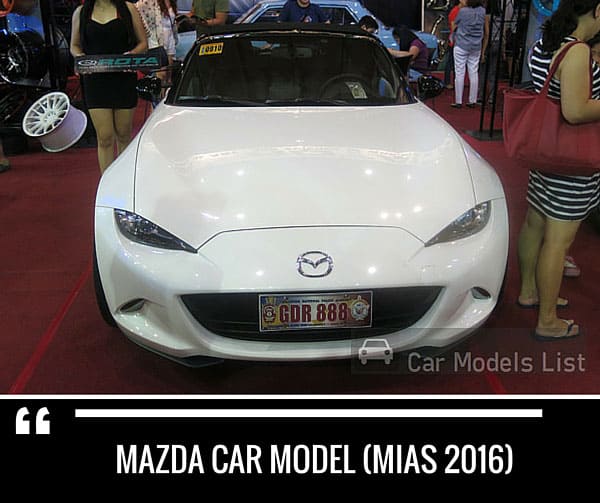
Mazda has produced hundreds of car models since 1920, including sedans, SUVs, trucks, and hybrid vehicles. Below is the complete Mazda car models and variants list (1920 – 2026), covering both current and discontinued models.
Zooming past its rivals, the Japanese automotive manufacturer Mazda has shown that it has got what it takes to be a global leader in its field. Aptly named after a god, Ahura Mazda (a Persian-Zoroastrian god of some of the earliest civilizations in West Asia), and also derived from its great founder, Jujiro Matsuda, the brand shows pride in every model it releases from its assembly lines.

This is justly so, with it being one of the most popular and stylish brands for both the common motorist and race driver as well.
Related Other Japanese Car Company Mitsubishi
Mazda’s accomplishments are many. Here are some of them:
Rotary Engine – ingenuity and the unique appeal of being different can be seen in the brand’s decision of sticking with a rotary engine. Unconventional as compared to tried-and-tested engines, the company’s engineering efforts have shown its skill on making the rotary engine a popular – and exciting – choice for drivers everywhere. So great it is, that this particular engine is considered synonymous on having a sporty and efficient ride.
Friend of the Earth – the brand is constantly researching on what kind of material to make their cars out of, to provide a cleaner future for motorists (and for the world). The company has tried using all sorts of material, ranging from lightweight plastic to even milk, to create an actual “bio-car”.
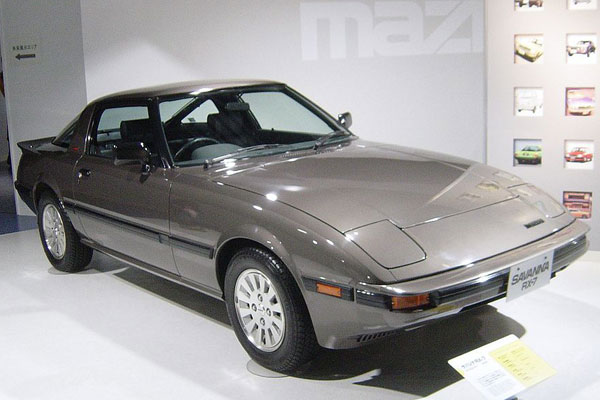 Fashionable Mazda Model
Image source: wikimedia.org
Speed – the brand doesn’t go “zoom zoom” for nothing. Car models from this company is known to go at top speeds, making each driving experience fun and speedy. Safety is considered of course, with built-in car care systems implemented to prevent accidents from happening.
Full List of Mazda Car Models
List of Mazda’s Sedan Vehicles
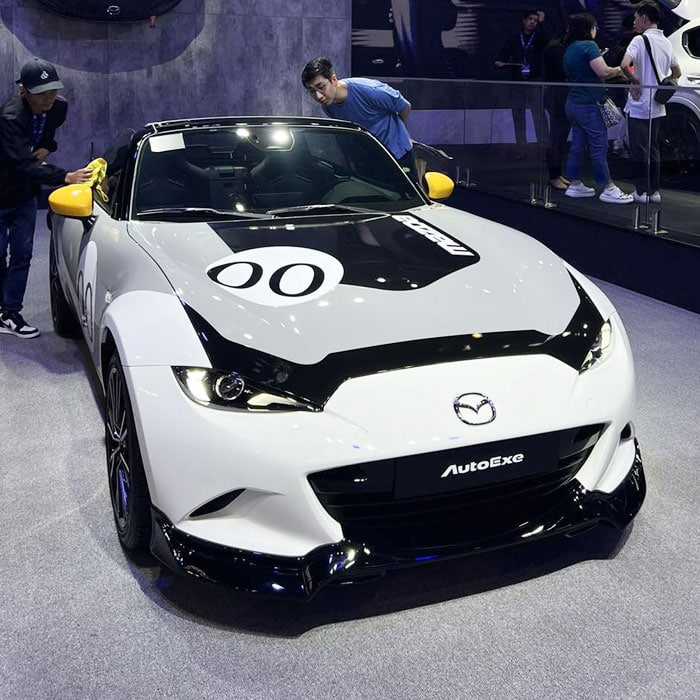
Let’s talk about the Mazda AutoExe – a car that’s not just about getting from A to B but about making every drive an experience. Think of it as Mazda’s signature style, dialed up with a sporty twist and precision engineering that makes it stand out.
What Makes It Special?
The AutoExe isn’t your everyday Mazda. It’s a customized version tailored for those who crave a bit more flair and performance. With sleek aerodynamic upgrades, a lower stance, and design elements that scream “sporty sophistication,” the AutoExe has the kind of presence that makes heads turn, whether you’re parked or on the move.
Built for the Thrill
Under the hood, the Mazda AutoExe takes driving dynamics to the next level. Enhanced suspensions, tuned exhaust systems, and sportier handling make it feel like the road is your playground. It’s the perfect balance of power and control, giving you confidence in every twist and turn.
Comfort Meets Cool
Don’t let the performance-focused design fool you—the AutoExe doesn’t skimp on comfort. Step inside, and you’ll find premium materials, supportive seats, and tech features that make your drives as smooth and connected as they are exciting.
Why You’ll Love It
The Mazda AutoExe is for those who want more than just a car—it’s for people who want a statement piece on wheels. It’s bold, fun, and delivers a driving experience that’s as thrilling as it is stylish.
So, if you’re ready to take your love for Mazda to the next level, the AutoExe is calling your name. Who says you can’t have it all—style, performance, and personality?
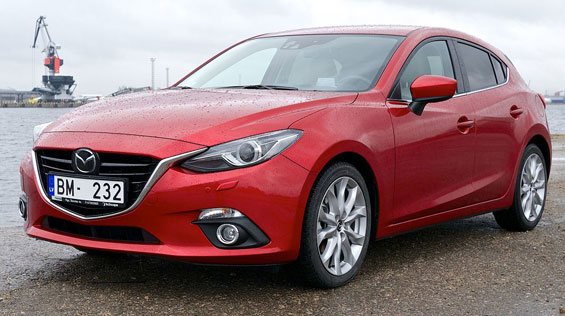
Image source: wikimedia.org
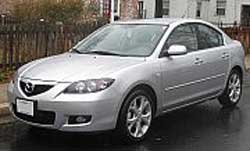
Accelerate towards a brighter future with the Mazda3.
Comfortable Driving Experience
The Mazda3 integrates the best of the Skyactiv-Vehicle Dynamics system, assuring both driver and his or her passengers of smooth and even safer rides. With a G-Vectoring Control feature, the Mazda3 efficiently takes the fatigue out of even the longest drives – just perfect for those pesky traffic jams in the metro!
Classy Interiors
Making use of the finest materials and incorporating the Mazda KODO design philosophy, the Mazda3’s interiors are both stylish and functional. The sport seats are ergonomically designed; the upholstery even absorbs road noise!
A Beautiful Standout
The Mazda3’s exteriors make it shine. Sleek and sporty, this is a car that will grab attention on the road.
Mazda 3 Hatchback Variants
- Mazda 3 Hatchback 1.5 SkyActiv V AT
- Mazda 3 Hatchback 2.0 SkyActiv R AT
- Mazda 3 Hatchback 2.0 SkyActiv R AT Soul Red
- Mazda 3 Hatchback 2.0 SkyActiv SPEED AT
- Mazda 3 Hatchback 2.0 SkyActiv SPEED AT Soul Red
Mazda 3 Sedan Variants
- Mazda 3 Sedan 1.5 SkyActiv V AT
- Mazda 3 Sedan 2.0 SkyActiv R AT
- Mazda 3 Sedan 2.0 SkyActiv R AT Soul Red
More About Mazda 3 on Wikipedia
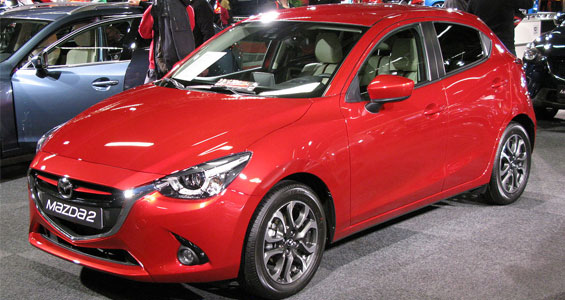
Image source: wikimedia.org
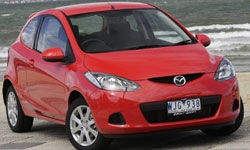
Fun can be packaged in a small car – best exemplified by the beautiful Mazda2!
Energy Efficient
The Mazda2 has an impressive engine, SKYACTIV-G 1.5L, which enables powerful yet eco-friendly drives. Fuel efficiency is also prioritized in the Mazda2 – just perfect for drives opting for an exciting yet practical car!
The Soul of Motion
As a standard philosophy among Mazda models, the Mazda 2 defines KODO – capturing the very instance when energy turns into motion. Best exemplified in the design, the aerodynamic stylish and the aesthetic accents bring about an attractive yet moving impression.
A Stop that Starts Fuel Economy
The Mazda2’s i-Stop idling stop system allows one to experience what a fuel-efficient car is. Adjusting to various driving conditions, this system makes sure that idling wouldn’t consume fuel at a fast rate.
Mazda 2 Hatchback Variants
- Mazda 2 Hatchback 1.5 SkyActiv V+ AT
- Mazda 2 Hatchback 1.5 SkyActiv AT Midnight Edition
Mazda 2 Sedan Variants
- Mazda 2 Sedan 1.5 SkyActiv V+ AT
- Mazda 2 Sedan 1.5 SkyActiv R AT
- Mazda 2 Sedan 1.5 SkyActiv R AT (Soul Red)
More About Mazda 2 on Wikipedia
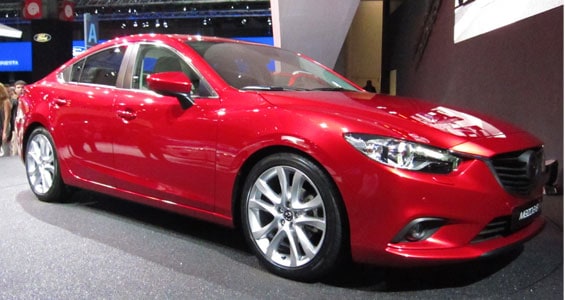
Image source: wikipedia.org
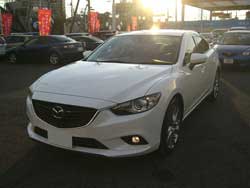
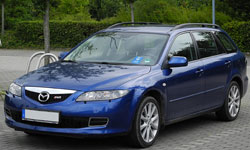
The Mazda 6 is a lineup of sedans designed and created by Mazda, a Japanese automaker. The production of cars under Mazda 6 started in 2002 and still has some cars available for purchase today. Its sales ranged from 40,000 to 70,000 units per year.
Mazda 6 Sedan Variants
- Mazda 6 Sedan 2.5 SkyActiv-G AT
- Mazda 6 Sedan 2.5 SkyActiv-G AT Soul Red
- Mazda 6 Sedan 2.2 SkyActiv-D AT
Mazda 6 Sports Wagon Variants
- Mazda 6 Sports Wagon 2.5 SkyActiv-G AT
- Mazda 6 Sports Wagon 2.5 SkyActiv-G AT Soul Red
More About Mazda 6 on Wikipedia
SUV Body Types by Mazda
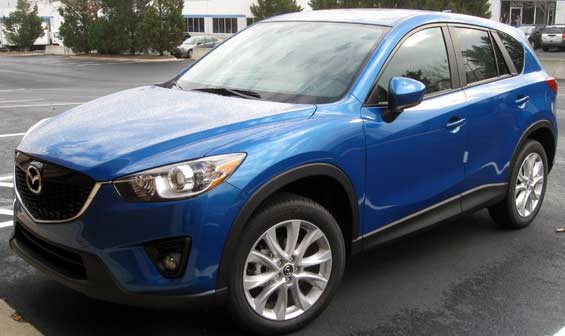
Image source: wikimedia.org
Handles like a dream – probably the best phrase to describe the fantastic Mazda CX-5!
Powerful Grip
One of the reasons why the Mazda CX-5 is amazing is because of its distinct driving feel. As reported by fellow motorists, the powerful – and satisfying – crunch of the car’s grip on pavement is apparent. And for a luxurious-looking vehicle, the high performance feel may come as a welcome surprise for some!
Behold the Beauty
Just take a look at it: the Mazda CX-5 is the stuff of dreams! The rear doors opens up to 80 degrees – it’s as if it’s welcoming passengers in! And the interiors are grand as well. With features such as heated seating and head-up display, this SUV truly provides the “Soul” it’s constantly marketed for.
Going the Distance
Another good reason why the Mazda CX-5 is such a hit is because of its efficient fuel economy. Maximize rides and go for longer distances with this fun and luxurious SUV!
Mazda CX-5 Variants
- Mazda CX-5 2.0 FWD Pro
- Mazda CX-5 2.0 FWD Pro Soul Red Crystal
- Mazda CX-5 2.5 AWD Sport
- Mazda CX-5 2.5 AWD Sport Soul Red Crystal
- Mazda CX-5 2.2 AWD Sport SkyActiv-D
- Mazda CX-5 2.2 AWD Sport SkyActiv-D Soul Red Crystal
More About Mazda CX-5 on Wikipedia
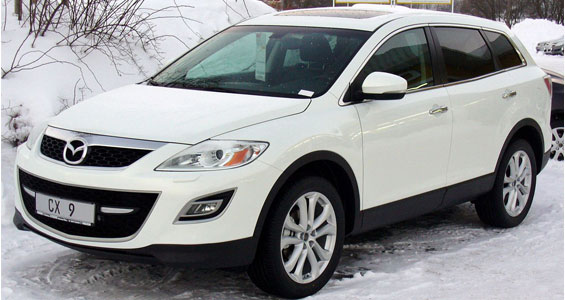
Image source: wikimedia.org
Appreciate the definition of style and performance with the Mazda CX-9.
Stay in Control
The Mazda CX-9 takes pride of its efficient predictive i-ACTIV AWD® all-wheel-drive system. An innovation that every motorist should experience, for this smart solution effectively adapts to any kind of driving condition.
A Stylish Drive
This crossover SUV defines what is it to be in style. Sophistication is assured, with the Nappa leather lining and sculpted aluminium integrated onto the vehicle.
The Soul of Driving
The Mazda CX-9 lives by this car brand’s credo of “Soul of Motion.” Emphasizing this philosophy can be seen in its driver-centric features and stylish exterior design.
Mazda CX-9 Variants
- Mazda CX-9 2.5 SkyActiv-Turbo Grand Touring AWD
More About Mazda CX-9 on Wikipedia
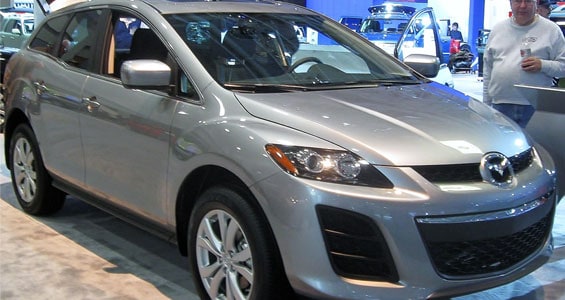
Image source: wikimedia.org
Launched in the year 2006, this MX-Crossport production version became a pitch to many customers.
More About Mazda CX-7 on Carmodelslist’s Blog
List of All Mazda MPV Vehicles
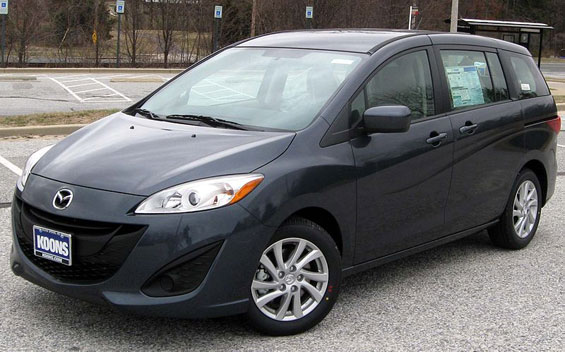
Image source: wikimedia.org
Versatility without compromising on style is what the Mazda5 has to offer for motorists.
Inspired by the Bento Box
Uniquely applying the stylish and practical usage of the Japanese bento box, the Mazda5’ storage design can fit a lot of cargo without compromising on the car’s overall look.
Space Within
The Mazda5 comfortably fits six passengers. Integrating the bento storage system above, trips are now comfortable and exciting!
Road Performance Still the Best
Functionality can now complement great driving performance with the Mazda5. the 157 horsepower engine works well in conjunction with the four-wheel independent suspension – offering comfort and still powerful drives.
More About Mazda5 on Wikipedia
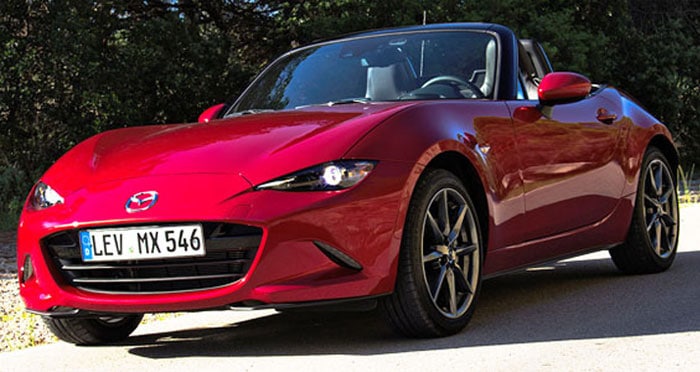
Image source: wikimedia.org
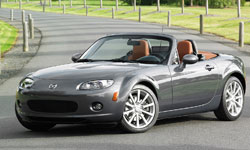
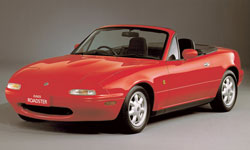
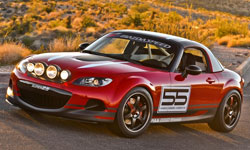
Your reward for working hard is speed and the Mazda MX-5 is the best representation for that need. Ever the stunner, this roadster has always been synonymous to style and performance.
Mazda MX-5 Variants
- Mazda MX-5 2.0 MT
- Mazda MX-5 2.0 AT
More About Mazda MX-5 on Carmodelslist’s Blog
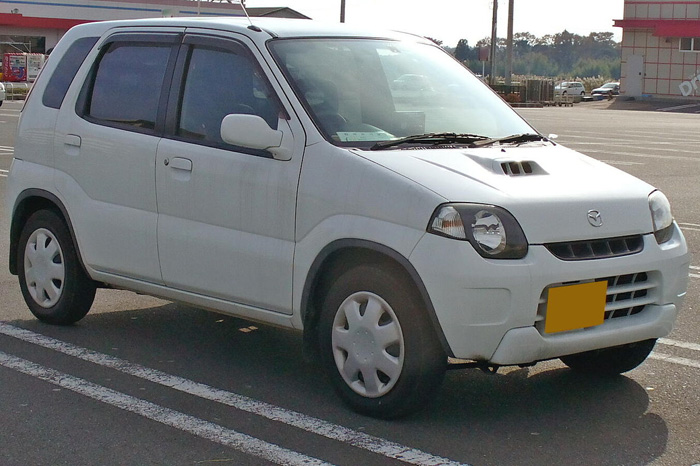
A Compact Kei Car Designed for Urban Practicality
The Mazda Laputa was introduced as a compact kei car developed primarily for the Japanese market. Based on the Suzuki Kei, the Laputa featured a tall, compact body that maximized interior space while maintaining dimensions suited to Japan’s narrow streets and limited parking areas. Its practical five-door design, elevated seating position, and compact footprint made it a convenient choice for everyday urban transportation.
Efficient Engineering and Compact Performance
The Mazda Laputa was offered with small-displacement three-cylinder and four-cylinder gasoline engines, including turbocharged variants, paired with manual or automatic transmissions depending on the model. Front-wheel-drive and four-wheel-drive configurations were available, providing flexibility for different driving conditions. Produced from 1999 to 2006, the Laputa became part of Mazda’s kei car lineup and remains notable for its Suzuki-based engineering, distinctive styling, and efficient use of interior space.
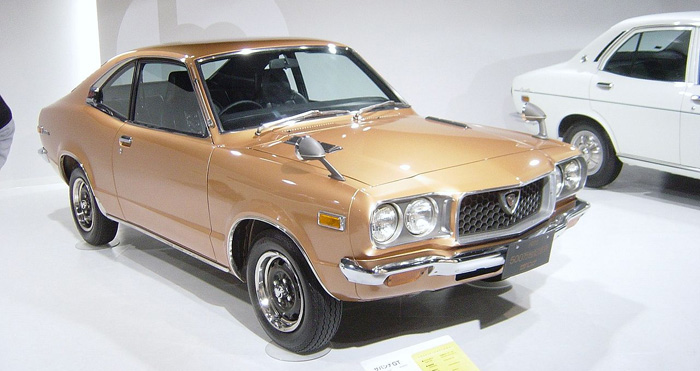
A Legendary Japanese Sports Coupe with Rotary-Powered Performance
The Mazda Savanna was introduced as a sporty compact car developed to showcase Mazda’s rotary-engine technology and performance capabilities. Sold in different markets under names such as the RX-3, the Savanna became known for its sleek coupe styling, lightweight construction, and strong motorsport presence. It was offered in several body styles, including coupe, sedan, and wagon, giving buyers a combination of performance and everyday practicality.
Rotary Engineering and Motorsport Heritage
The Mazda Savanna was powered primarily by Mazda’s rotary engines, delivering smooth power and a distinctive high-revving character. Rear-wheel drive, responsive handling, and lightweight construction made the model particularly successful in motorsport, where it developed a strong reputation in Japanese touring car racing. Produced from 1971 to 1978, the Savanna remains an important part of Mazda’s rotary heritage and is highly regarded by collectors and enthusiasts for its unique engineering, sporty character, and racing history.
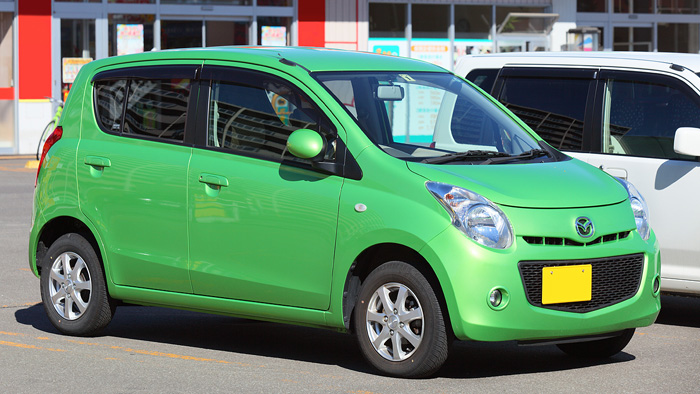
A Compact Kei Car Designed for Practical Urban Mobility
The Mazda Carol is a small kei car developed for efficient and convenient transportation in Japan. First introduced in 1962, the Carol has evolved through multiple generations, maintaining its focus on compact dimensions, low running costs, and easy maneuverability. Modern versions feature a practical hatchback design, comfortable interior, and efficient packaging that makes the vehicle well suited for crowded city streets and limited parking spaces.
Efficient Engineering and Modern Development
Throughout its history, the Mazda Carol has used a variety of small-displacement engines and, in later generations, adopted technology and platforms shared with other Japanese manufacturers, particularly Suzuki. Modern versions are equipped with fuel-efficient engines, front-wheel drive or available four-wheel drive, and contemporary safety and convenience features. With its long production history and continued emphasis on efficiency and practicality, the Mazda Carol remains a recognizable name in Japan’s kei car segment.
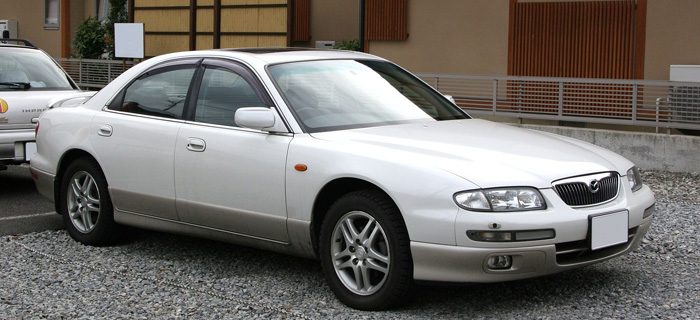
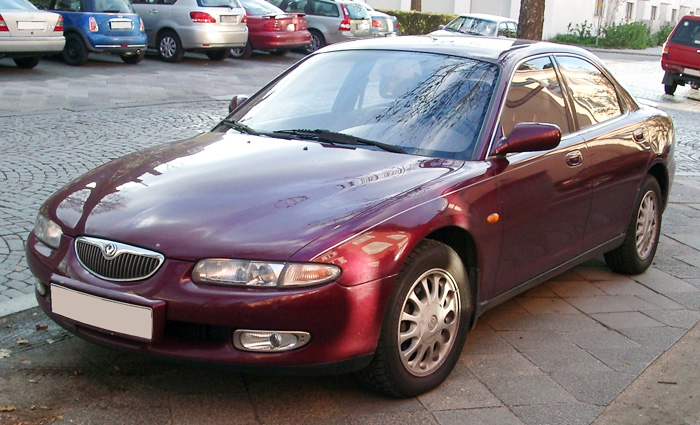
A Refined Executive Sedan Designed for Comfort and Advanced Engineering
The Mazda Millenia is a midsize luxury sedan introduced in 1993, developed as part of Mazda’s effort to establish a more premium presence in the market. It was originally associated with Mazda’s planned luxury brand, Amati, before being released under the Mazda name. Known as the Mazda Xedos 9 in some markets, the Millenia featured elegant styling, a spacious cabin, and a front-wheel-drive layout designed to provide a comfortable and refined driving experience.
Innovative Engines and Premium Features
The Mazda Millenia was offered with several V6 engines during its production, including a distinctive 2.3-liter Miller-cycle V6 equipped with a supercharger in higher specifications. The Miller-cycle engine was designed to improve efficiency while maintaining strong performance, making it one of the Millenia’s most notable engineering features. Depending on the market and model year, the sedan also offered automatic transmission, leather upholstery, advanced suspension systems, and other premium equipment. Produced until 2002, the Millenia remains notable for its combination of luxury-oriented design and unconventional Mazda engineering.
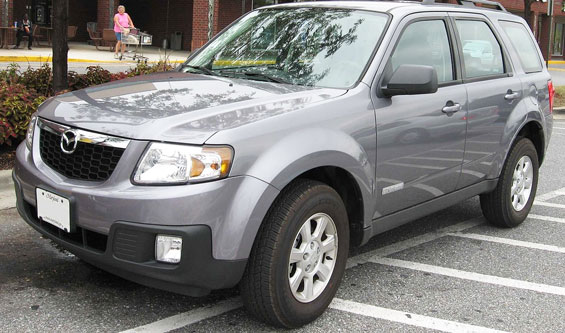
A Practical SUV Combining Rugged Capability with Everyday Comfort
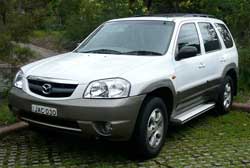
The Mazda Tribute is a compact SUV introduced in 2000, developed through a collaboration between Mazda and Ford. It was closely related to the Ford Escape and was designed to provide a balance of passenger-car comfort, utility, and light off-road capability. The Tribute featured a practical five-door body, spacious interior, and available four-wheel drive, making it suitable for both urban driving and recreational use.
Versatile Powertrains and Proven SUV Engineering
Depending on the market and model year, the Mazda Tribute was offered with four-cylinder and V6 gasoline engines paired with manual or automatic transmissions. Its independent suspension and available four-wheel-drive system provided stable handling and additional traction on rough or slippery surfaces. The first-generation Tribute remained in production until 2006, while a second generation was introduced for selected markets and continued until 2011. The model became an important part of Mazda’s SUV lineup before being succeeded by newer crossover models such as the CX-5.
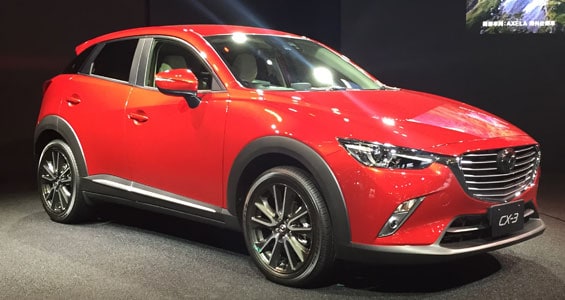
Image source: wikimedia.org
A Compact Crossover Combining Sporty Design and Everyday Versatility
The Mazda CX-3 is a subcompact crossover SUV introduced in 2014, designed to combine Mazda’s sporty driving character with the practicality of a raised, versatile body style. Positioned below the CX-5 in Mazda’s lineup, the CX-3 features the brand’s Kodo design language, characterized by a sculpted exterior, flowing body lines, a prominent grille, and a compact yet athletic stance. Its elevated seating position and available all-wheel drive make it well suited to urban driving and a variety of road conditions.
Efficient Performance and Driver-Focused Technology
The Mazda CX-3 is powered by efficient four-cylinder gasoline engines, with specifications varying by market and model year. It incorporates technologies such as Mazda’s SKYACTIV engineering, responsive automatic or manual transmissions, and available i-ACTIV all-wheel drive to balance performance, fuel economy, and traction. Inside, the CX-3 offers a driver-oriented cabin with modern infotainment, advanced safety features, and high-quality materials. Although compact in size, it provides a practical alternative to traditional hatchbacks while retaining Mazda’s emphasis on engaging handling and refined design.
Mazda CX-3 Variants
- Mazda CX-3 2.0 FWD 4×2 AT
- Mazda CX-3 2.0 FWD Sport AT
- Mazda CX-3 2.0 AWD Activ AT
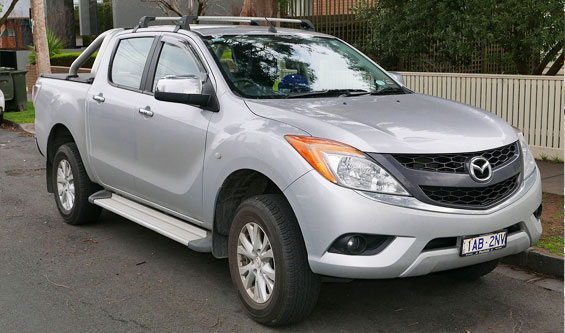
A Rugged Pickup Built for Work, Utility, and Everyday Driving
The Mazda BT-50 is a midsize pickup truck introduced in 2006, developed to combine practical load-carrying capability with the comfort and styling associated with Mazda vehicles. Available in single-cab, freestyle-cab, and double-cab configurations depending on the market and generation, the BT-50 has been offered for both commercial and personal use. Its bold exterior design, spacious cabin, durable chassis, and available four-wheel-drive system make it suitable for a wide range of work and recreational applications.
Diesel Performance and Off-Road Capability
The Mazda BT-50 has been offered with a range of four-cylinder and six-cylinder diesel engines, depending on the generation and market. Earlier generations shared engineering with Ford pickup platforms, while the current generation is based on the Isuzu D-Max and uses Isuzu-sourced diesel powertrains. Depending on specification, the BT-50 can feature manual or automatic transmissions, four-wheel drive, towing equipment, and modern driver-assistance technologies. With its combination of utility, durability, and improved cabin refinement, the BT-50 has remained an important model in Mazda’s global commercial and lifestyle vehicle lineup.
Mazda BT-50 Variants
- Mazda BT-50 2.2 4×2 MT
- Mazda BT-50 2.2 4×2 AT
- Mazda BT-50 3.2 4×4 AT
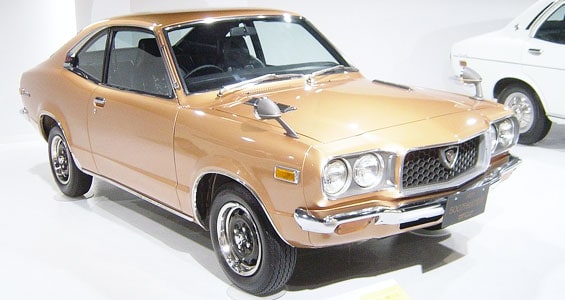
A Classic Rotary-Powered Sports Car with Distinctive Styling
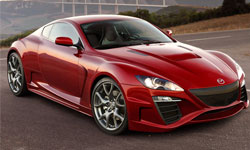
The Mazda RX-3 is a compact sports car introduced in 1971, known for its lightweight construction, sporty design, and association with Mazda’s rotary-engine heritage. Sold in Japan as the Mazda Savanna, it was available in coupe, sedan, and station wagon body styles, depending on the market. Its clean body lines, compact proportions, and performance-focused character made it popular among driving enthusiasts, while its affordability helped establish Mazda’s reputation for producing accessible rotary-powered vehicles.
Rotary Engine Performance and Motorsport Success
The Mazda RX-3 was offered with Mazda’s Wankel rotary engines, including the 10A and 12A units in various versions and markets. These compact engines delivered smooth power and allowed the RX-3 to maintain a lightweight, responsive character. The model also achieved considerable success in motorsport, particularly in touring-car racing, where its rotary power and nimble handling helped it compete against larger-engined rivals. Produced during the 1970s, the RX-3 became an important part of Mazda’s performance history and remains a sought-after classic among rotary-engine enthusiasts.
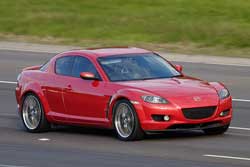
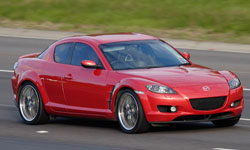
- Mazda RX-8
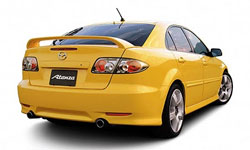
- Mazda Atenza
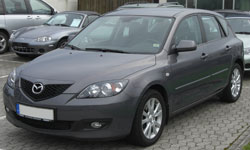
- Mazda Axela
- Mazda MX-5 RF
Mazda MX-5 RF Variants
– Mazda MX-5 RF 2.0 AT
– Mazda MX-5 RF 2.0 AT Premium
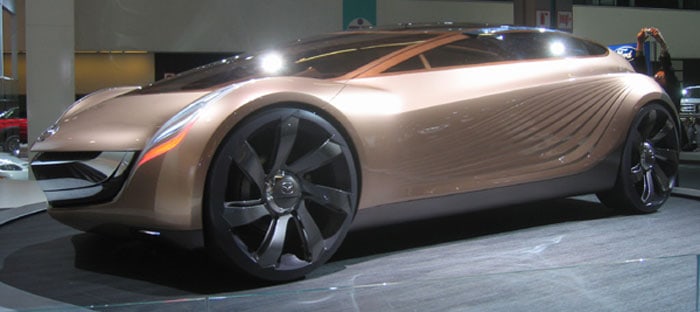
A Futuristic Design Concept Showcasing Mazda’s Vision for Motion-Inspired Styling
The Mazda Nagare was a concept car unveiled at the 2006 Los Angeles Auto Show as a design study exploring Mazda’s future styling direction. Its name, Nagare, means “flow” in Japanese, reflecting the vehicle’s flowing body surfaces and dramatic lines inspired by wind, water, and natural movement. Created by Mazda’s global design team under the direction of Laurens van den Acker, the concept featured a low, sculpted profile, distinctive lighting, and a highly experimental exterior intended to demonstrate how automotive design could express a sense of motion even when the vehicle was stationary.
A Landmark Concept in Mazda’s Modern Design Language
Rather than being developed as a production vehicle, the Mazda Nagare served as a styling exercise that influenced several later Mazda concepts and production models. Its organic surfaces, flowing character lines, and emphasis on visual movement helped establish design themes that appeared in subsequent Mazda vehicles. The Nagare was followed by related concepts such as the Ryuga and Hakaze, making it an important part of Mazda’s design development during the late 2000s. Although it never entered production, the Nagare remains notable for its bold approach to automotive styling and its role in shaping Mazda’s later design identity.
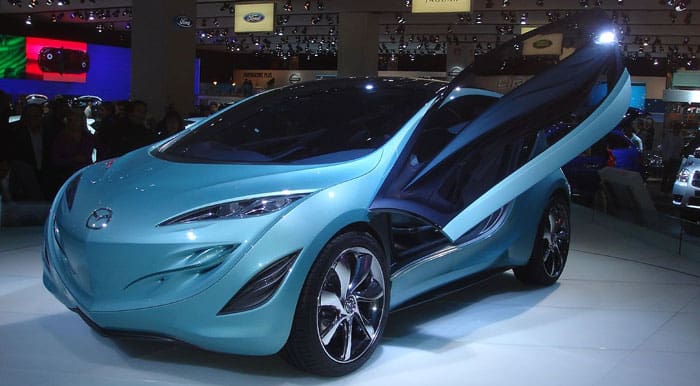
A Lightweight Concept Car Focused on Efficiency and Sustainable Urban Mobility
The Mazda Kiyora was a compact concept car unveiled at the 2008 Paris Motor Show, designed to demonstrate Mazda’s vision for an efficient and environmentally conscious urban vehicle. Its name, Kiyora, means “clean and pure” in Japanese, reflecting the concept’s emphasis on clean design, low weight, and reduced environmental impact. The vehicle featured a compact, aerodynamic body with a distinctive glass roof and flowing surfaces inspired by water, creating a modern appearance while supporting improved aerodynamic efficiency.
Advanced Efficiency and Lightweight Engineering
The Mazda Kiyora was developed around a lightweight construction philosophy and was powered by a small, highly efficient gasoline engine paired with Mazda’s SKY-G engine technology. It also incorporated technologies such as stop-start functionality and regenerative braking to reduce fuel consumption and emissions. Although the Kiyora was never produced as a standalone production model, its design and engineering ideas helped preview Mazda’s approach to lightweight construction, efficient powertrains, and environmentally focused technology that would appear in later vehicles.
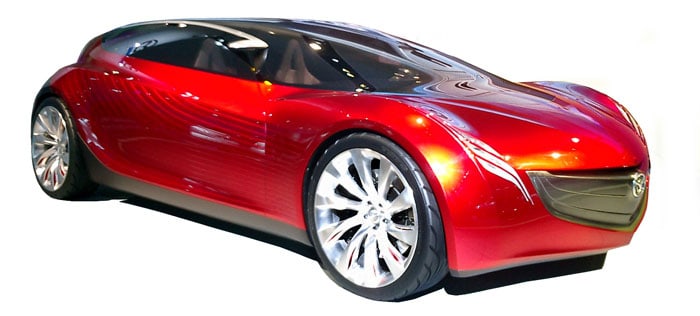
A Futuristic Concept Car Inspired by the Flow of Nature
The Mazda Ryuga was a futuristic concept car unveiled at the 2007 North American International Auto Show in Detroit, developed as a continuation of Mazda’s exploration of flowing, nature-inspired automotive design. Its name, Ryuga, can be associated with the Japanese expression for “graceful flow,” reflecting the vehicle’s sculpted surfaces and dynamic appearance. The concept featured a low, wide stance, dramatic front styling, flowing body lines, and a spacious cabin designed to create a sense of movement even when stationary.
Advanced Styling and a Vision for Future Mazda Design
The Ryuga was primarily a design study rather than a production vehicle, with its focus placed on exterior proportions, interior atmosphere, and future design themes rather than production specifications. Its organic surfaces and emphasis on flowing forms followed the design philosophy introduced by the earlier Mazda Nagare concept. Although the Ryuga never entered production, it helped demonstrate Mazda’s evolving design direction during the 2000s and contributed to the broader development of the brand’s distinctive styling language.
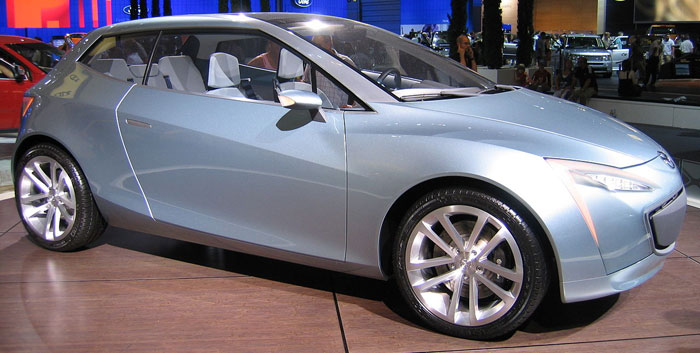
A Compact Concept Car Exploring a New Direction for Urban Mobility
The Mazda Sassou was a compact concept car unveiled at the 2005 Frankfurt Motor Show, developed to explore Mazda’s ideas for a stylish and practical small hatchback. Its name, Sassou, is a Japanese term associated with a light, free-flowing character, reflecting the concept’s youthful design and emphasis on movement. The three-door hatchback featured a distinctive front end, sculpted bodywork, a spacious-looking glass roof, and a modern interior designed around the needs of younger urban drivers.
Innovative Design and Flexible Interior Technology
The Mazda Sassou was designed around a lightweight, compact platform and featured a small gasoline engine intended to provide efficient urban performance. Its interior incorporated innovative storage solutions and technology-focused features, including a center console designed to accommodate portable digital devices. Although the Sassou never entered production, its design themes and practical ideas contributed to Mazda’s exploration of future small-car styling and technology during the mid-2000s.
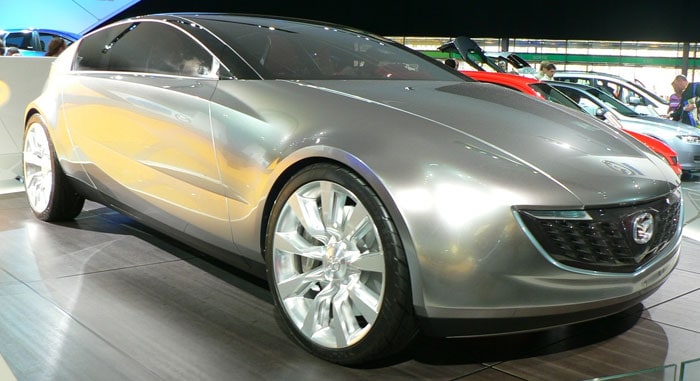
A Futuristic Rotary-Powered Coupe Concept Exploring Elegant Design
The Mazda Senku was a four-seat sports coupe concept unveiled at the 2005 Tokyo Motor Show, created to explore Mazda’s vision for an advanced and stylish grand touring vehicle. Its name, Senku, means “pioneer” in Japanese, reflecting the concept’s forward-looking design and technology. The Senku featured a long, low profile, sweeping body lines, distinctive rear-hinged doors, and a spacious glass roof, giving it a dramatic appearance while emphasizing Mazda’s flowing design philosophy.
Rotary Power and Innovative Hybrid Technology
The Senku was powered by a next-generation hydrogen rotary engine combined with an electric motor system, demonstrating Mazda’s interest in alternative powertrains while retaining its signature rotary-engine technology. The concept also incorporated rear-wheel drive and a lightweight construction approach aimed at delivering responsive performance. Although the Senku never entered production, it served as an important design and technology study during Mazda’s development of future vehicles and demonstrated the company’s continuing commitment to rotary-engine innovation.
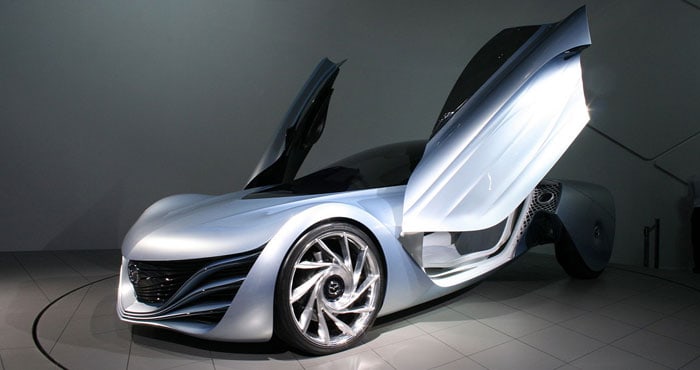
A Futuristic Sports Car Concept Inspired by the Flow of Air
The Mazda Taiki was a futuristic sports car concept unveiled at the 2007 Tokyo Motor Show, developed as part of Mazda’s exploration of flowing, nature-inspired automotive design. Its name, Taiki, means “atmosphere” in Japanese, reflecting the concept’s emphasis on air and movement. The Taiki featured an extremely low and aerodynamic body, dramatic flowing surfaces, a long cabin, and distinctive rear styling designed to create a visual connection between the vehicle and the movement of air around it.
Advanced Design and a Vision for Future Sports Cars
The Taiki was created primarily as a design study rather than a production vehicle and continued themes introduced by earlier concepts such as the Mazda Nagare and Ryuga. Its cabin was positioned prominently within the streamlined body, while the interior incorporated lightweight, futuristic materials and a driver-focused layout. Although the Taiki never entered production, it represented an important stage in Mazda’s late-2000s design development and demonstrated how natural forms and aerodynamic principles could be translated into an expressive sports car concept.
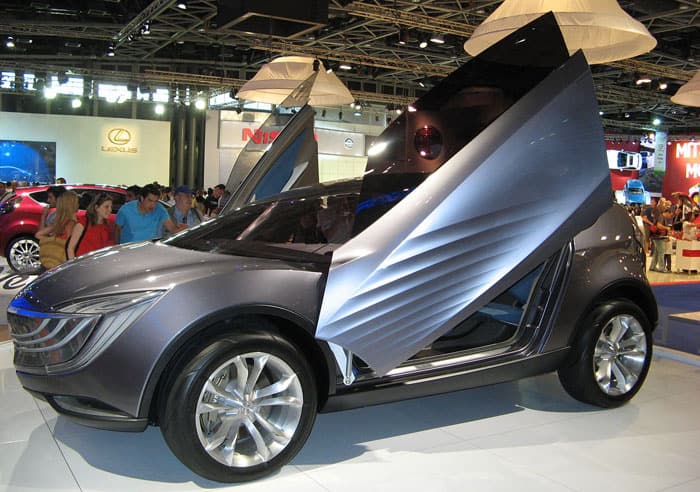
A Dynamic Crossover Concept Inspired by Wind and Movement
The Mazda Hakaze was a crossover concept unveiled in 2007 as part of Mazda’s exploration of future design and compact SUV styling. Its name combines Japanese words associated with leaves and wind, reflecting the concept’s flowing surfaces and aerodynamic appearance. The Hakaze featured a sleek, coupe-like profile, a prominent front grille, sculpted bodywork, and a spacious glasshouse, demonstrating how Mazda could combine the practicality of a crossover with a more expressive and sporty design.
Innovative Design Focused on Urban Versatility
The Hakaze was developed primarily as a design study rather than a production model, with its emphasis placed on lightweight construction, aerodynamic efficiency, and flexible interior space. Its flowing exterior surfaces continued themes introduced by Mazda’s earlier Nagare concept and were part of the company’s broader exploration of motion-inspired design. Although the Hakaze never entered production, its styling ideas contributed to Mazda’s design development and helped demonstrate the direction of its future crossover vehicles.
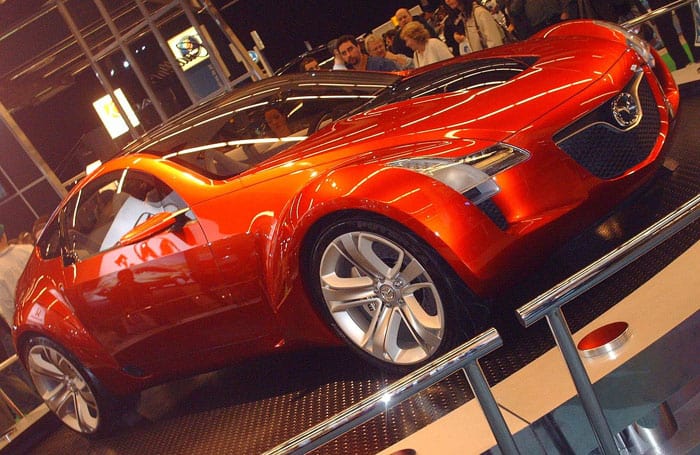
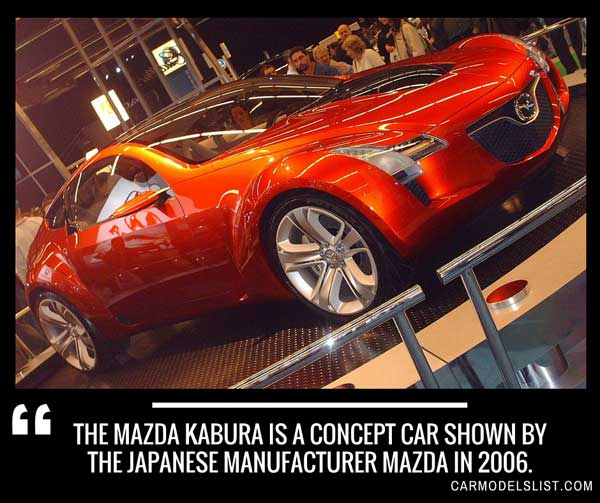
A Compact Sports Car Concept Designed for Agile Performance
The Mazda Kabura was a sports car concept unveiled at the 2006 North American International Auto Show in Detroit, showcasing Mazda’s vision for an affordable, lightweight, and driver-focused coupe. Its name comes from a Japanese term associated with the opening arrow in traditional Japanese archery, reflecting the concept’s forward-moving character. Designed by Mazda’s California-based design studio, the Kabura featured a compact three-door body, a low roofline, muscular wheel arches, and an unconventional seating arrangement that emphasized both sporty driving and interior flexibility.
Innovative Packaging and Lightweight Engineering
The Mazda Kabura was designed around a front-engine, rear-wheel-drive layout, a configuration chosen to deliver balanced handling and an engaging driving experience. Its interior featured a three-seat arrangement, with the driver’s seat positioned slightly forward and the passenger seating designed to maximize available space. Large glass surfaces and distinctive lighting gave the concept a futuristic appearance, while its compact proportions reflected Mazda’s focus on lightweight sports cars. Although the Kabura never entered production, it demonstrated ideas for a small, accessible sports coupe and highlighted Mazda’s commitment to creative design and driving enjoyment.
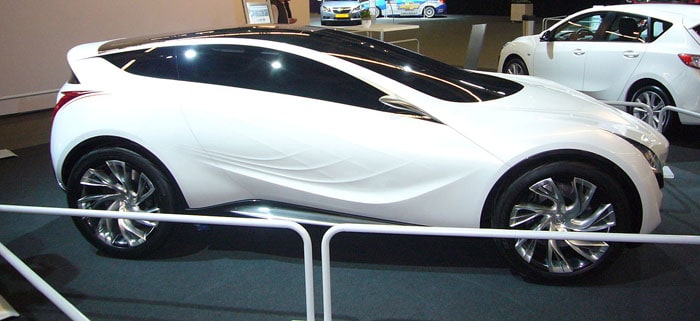
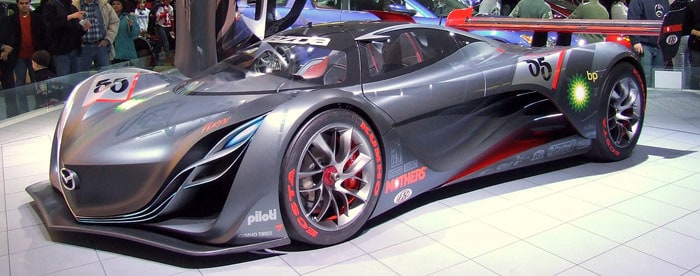
A Dramatic Concept Car Inspired by Mazda’s Racing Heritage
The Mazda Furai was a high-performance concept car unveiled at the 2008 North American International Auto Show in Detroit, developed to showcase Mazda’s vision of a road-going race-inspired sports car. Its name means “sound of the wind” in Japanese, reflecting its emphasis on speed and aerodynamic design. The Furai was built around a racing-derived chassis and featured an aggressive body with prominent aerodynamic elements, a low roofline, and flowing surfaces inspired by Mazda’s Nagare design language.
Race-Bred Engineering and Rotary Power
The Mazda Furai was powered by a three-rotor Wankel rotary engine producing approximately 450 horsepower and designed to run on E100 ethanol fuel. Its chassis was based on the Courage C65 Le Mans prototype, giving the concept genuine racing foundations rather than simply borrowing styling cues from motorsport. The Furai was developed as a fully functional vehicle and was tested on racetracks, making it one of Mazda’s most technically ambitious concepts of its era. Although it never entered production, the Furai became one of Mazda’s most distinctive concept cars and a notable expression of the company’s long association with rotary-engine technology and motorsport.
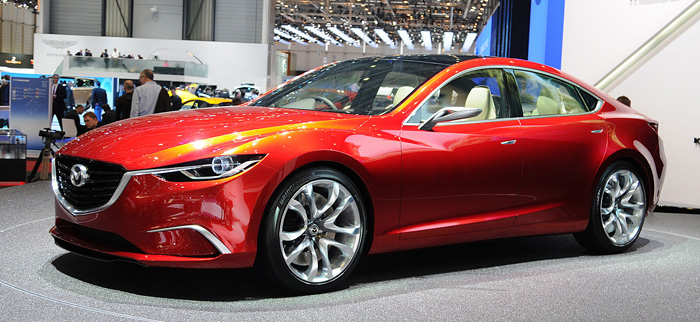
A Sleek Sedan Concept Introducing Mazda’s Next Generation of Design
The Mazda Takeri was a midsize sedan concept unveiled at the 2011 Tokyo Motor Show, showcasing Mazda’s vision for a stylish, efficient, and technologically advanced family car. Its name is associated with strength and masculinity in Japanese, reflecting its confident proportions and sculpted exterior. The Takeri featured Mazda’s Kodo – Soul of Motion design language, with a prominent front grille, flowing body lines, and a dynamic profile that previewed the styling of the next-generation Mazda6.
SKYACTIV Technology and Advanced Fuel Efficiency
The Mazda Takeri incorporated Mazda’s SKYACTIV technologies, including an efficient diesel engine, an automatic transmission, and the i-ELOOP regenerative braking system, which recovered energy during deceleration to help reduce fuel consumption. It also featured lightweight construction and advanced driver-assistance concepts aimed at improving safety and driving comfort. Although the Takeri never entered production as a standalone model, its design and technology directly influenced the third-generation Mazda6, introduced in 2012, making it an important concept in Mazda’s development of modern passenger cars.
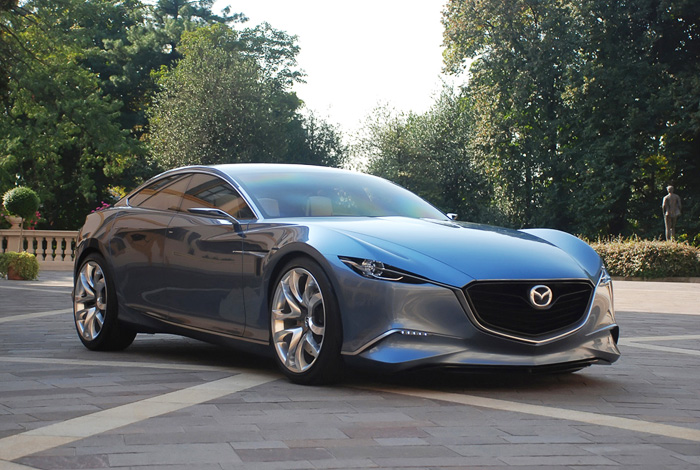
A Striking Concept Sedan Introducing Mazda’s New Design Direction
The Mazda Shinari is a four-door concept sedan unveiled in 2010, created to showcase Mazda’s evolving design philosophy and preview the brand’s future styling direction. Its name refers to the bending and twisting of a strong yet flexible material, reflecting the concept’s flowing body surfaces and sense of movement. Designed under the direction of Mazda’s global design team, the Shinari featured a long, low profile, sculpted surfaces, and a distinctive front grille that helped establish the design language later associated with Mazda’s production vehicles.
The Foundation of Mazda’s Kodo Design Language
The Shinari was developed primarily as a design study rather than a production vehicle, with its focus placed on proportions, aerodynamics, driver-focused ergonomics, and visual movement. Its flowing surfaces and prominent front-end treatment introduced elements of Mazda’s Kodo – Soul of Motion design philosophy, which subsequently influenced models such as the CX-5, Mazda6, and Mazda3. Although the Shinari itself never entered production, it played an important role in defining Mazda’s modern visual identity and demonstrated the company’s approach to combining elegant styling with a strong sense of motion.
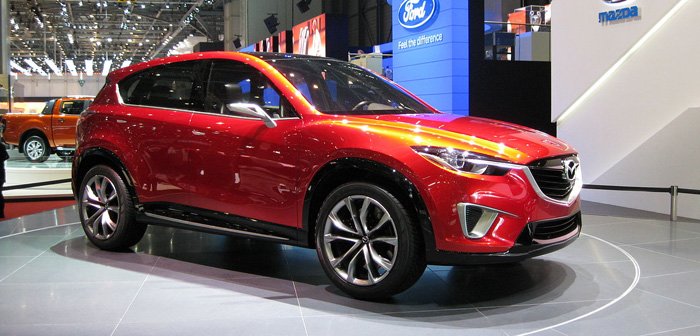
A Compact Crossover Concept Introducing Mazda’s Modern SUV Design
The Mazda Minagi was a compact crossover SUV concept unveiled at the 2011 Geneva International Motor Show, showcasing Mazda’s new Kodo – Soul of Motion design philosophy. Developed to preview the styling and engineering direction of future Mazda SUVs, the Minagi featured a sculpted body, a bold front grille, flowing character lines, and a sporty stance. Its compact dimensions and elevated ride height combined the practicality of an SUV with the sleek appearance of a passenger car, making it a significant concept in Mazda’s development of modern crossovers.
SKYACTIV Technology and Efficient Performance
The Mazda Minagi incorporated Mazda’s SKYACTIV technologies, including lightweight vehicle construction, an efficient engine, and advanced transmission systems designed to improve fuel economy and driving performance. Its engineering emphasized reduced weight, responsive handling, and lower emissions without sacrificing everyday usability. Although the Minagi never entered production under its own name, it directly previewed the first-generation Mazda CX-5, introduced in 2012, which became an important model in Mazda’s global SUV lineup.
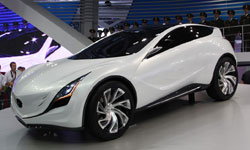
- Mazda Kaan
- Mazda Activehicle (1999)
- Mazda MX-5 Superlight (2009)
- Mazda MX-04 (1987)
- Mazda MX-03 (1985)
- Mazda MX-02 (1983)
- Mazda MV-X (1997)
- Mazda MS-X (1997)
- Mazda Miata Mono-Posto (1999)
- Mazda London Taxi (1993)
- Mazda Le Mans Prototype (1983)
- Mazda HR-X 2 (1993)
- Mazda HR-X (1991)
- Mazda Gissya (1991)
- Mazda CVS (1974)
- Mazda CU-X (1995)
- Mazda BU-X (1995)
- Mazda AZ550 (1989)
- Mazda MX-81 (1981)
- Mazda TD-R (1989)
- Mazda SW-X (1999)
- Mazda SU-V (1995)
- Mazda Secret Hideout (2001)
- Mazda RX-Evolv (1999)
- Mazda RX-500 (1970)
- Mazda RX-01 (1995)
- Mazda RX 87 (1967)
- Mazda Nextourer (1999)
- Mazda Neospace (1999)
- Mazda MX-Micro Sport (2004)
- Mazda MX-Flexa (2004)
- Mazda MX-Crossport (2005)
- Mazda MX Sportif (2003)
- Mazda MX Sport Tourier (2001)
Other Mazda Models
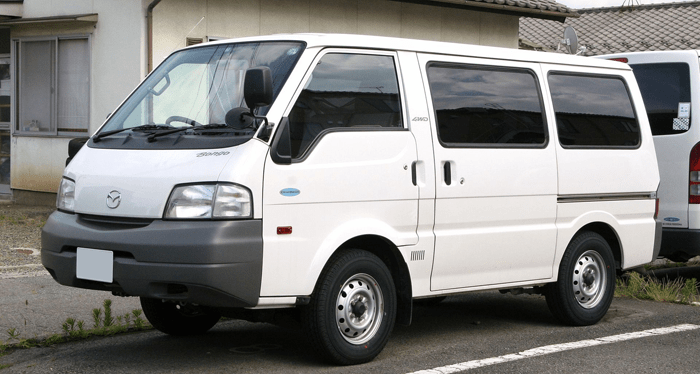
A Versatile Van Designed for Commercial Use and Family Transportation
The Mazda Bongo is a compact van and light commercial vehicle introduced in 1966, developed to provide practical transportation for passengers and cargo. Over multiple generations, it has been offered in van, minibus, and truck configurations, making it suitable for delivery businesses, small companies, and family use. Its compact dimensions, cab-over design, and flexible interior layout allow it to navigate narrow urban streets while providing useful cargo capacity. Depending on the generation and market, the Bongo has also been sold under names such as the Mazda E-Series.
Practical Engineering and Flexible Utility
The Mazda Bongo has been equipped with a variety of gasoline and diesel engines, with rear-wheel-drive and four-wheel-drive configurations available on selected versions. Its design emphasizes maneuverability, load-carrying practicality, and straightforward maintenance, while passenger versions offer flexible seating arrangements. Some generations have also served as the basis for camper conversions, making the Bongo popular among travelers seeking a compact recreational vehicle. Across its long history, the Mazda Bongo has remained a recognizable part of Mazda’s commercial vehicle lineup, valued for its versatility and practical design.
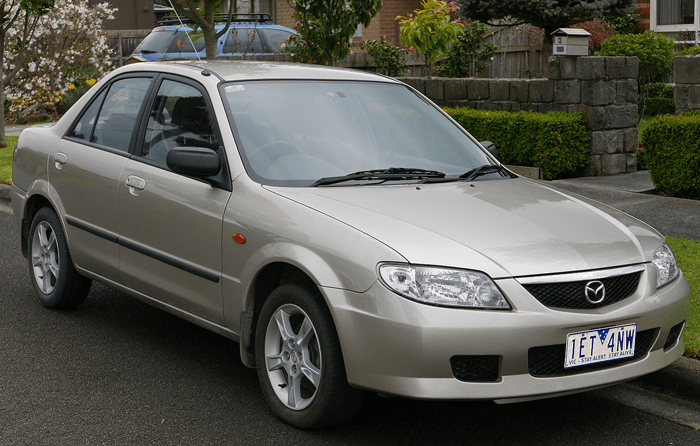
A Long-Running Compact Car Known for Practicality and Versatility
The Mazda Familia was a compact car produced by Mazda from 1963 to 2003, becoming one of the company’s most important models for several decades. Sold under different names in various markets, including Mazda 323 and Mazda Protegé, the Familia was offered in sedan, hatchback, wagon, and van configurations depending on the generation. Its compact dimensions, practical interior, and economical operation made it popular with families and everyday drivers.
Evolving Engineering Across Multiple Generations
Throughout its production history, the Mazda Familia was offered with a wide range of gasoline and diesel engines, with front-wheel drive becoming standard on later generations and four-wheel drive available on selected versions. The model evolved from a simple compact car into a more refined vehicle with improved safety, handling, comfort, and technology. The final Familia generation was produced until 2003, after which Mazda’s compact-car lineup continued through models such as the Mazda3.
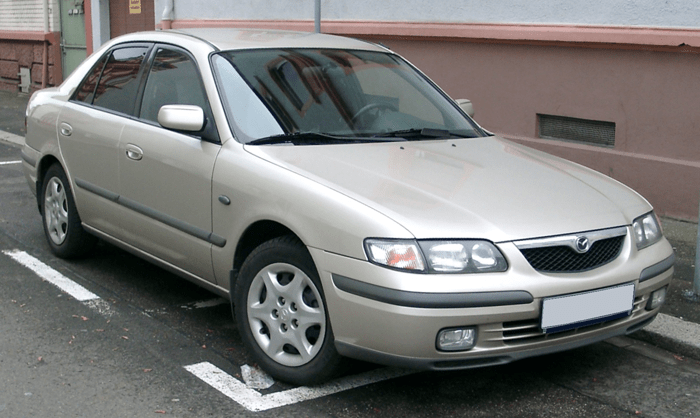
A Long-Running Japanese Family Car
The Mazda Capella was a long-running Japanese family car that became one of Mazda’s most important models from the 1970s through the early 2000s. Introduced in 1970, it was positioned between Mazda’s smaller passenger cars and larger models, offering practical dimensions with a more refined driving character. The Capella was produced in several body styles over its lifetime, including sedans, coupes, hatchbacks, and station wagons. In export markets, it became widely known as the Mazda 626, making the Capella one of Mazda’s best-known international nameplates.
Evolution Into a Global Mazda Model
Across its generations, the Capella evolved considerably from its original rear-wheel-drive layout to front-wheel-drive platforms as Mazda responded to changing market demands. Later versions offered four-cylinder gasoline engines, diesel options in selected markets, improved safety equipment, and increasingly sophisticated suspension and interior designs. The model also served as an important foundation for Mazda’s development of comfortable, globally competitive family cars. Production of the Capella nameplate ended in 2002, after which the Mazda6/Atenza effectively took over its position in Mazda’s lineup.
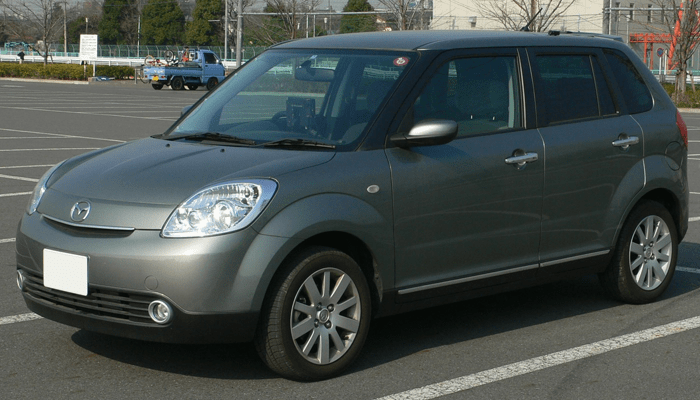
A Compact Kei Truck Built for Practical Urban Utility
The Mazda Porter was a small kei-class commercial vehicle produced in Japan, introduced in 1968 as a successor to Mazda’s earlier light trucks. Offered primarily as a compact cab-over pickup, the Porter was designed for businesses and drivers who needed an affordable vehicle for carrying goods in narrow urban areas. Its compact dimensions, simple construction, and practical cargo bed made it well suited to deliveries and light-duty work.
Simple Engineering for Everyday Commercial Use
The Mazda Porter was offered with small gasoline engines, with specifications evolving during its production run. Its lightweight construction and compact size helped provide economical operation and easy maneuverability, while its straightforward mechanical design made it suitable for commercial use. The Porter remained in production for several decades, with later versions marketed as the Porter Cab and equipped with updated engines and equipment. Production eventually ended in 1989, making the Porter one of Mazda’s notable early kei-class commercial vehicles.
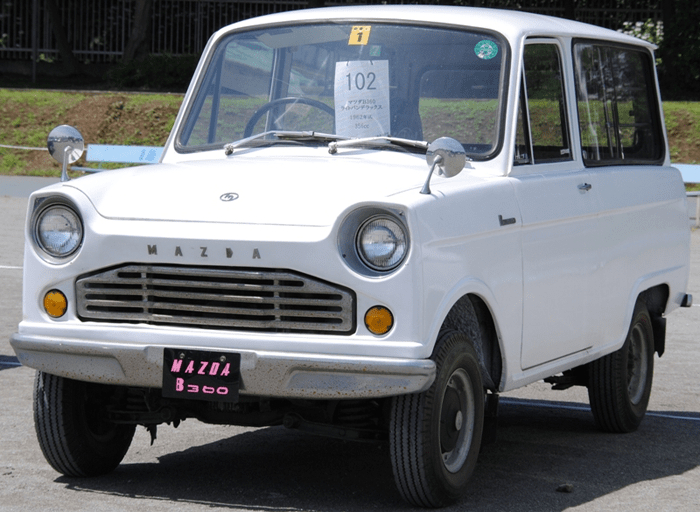
A Stylish and Forward-Looking Mazda Concept Inspired by Urban Mobility
The Mazda Porter was a design concept that explored a compact, modern approach to personal transportation, emphasizing Mazda’s characteristic blend of flowing surfaces and distinctive proportions. Its design study focused on creating a practical yet expressive vehicle with a strong visual identity.
Innovative Design Focused on Efficiency and Everyday Driving
The Porter showcased Mazda’s interest in combining efficient packaging with engaging design. Like other Mazda concept vehicles, it served as an exploration of future styling ideas and functional solutions rather than a conventional production model.
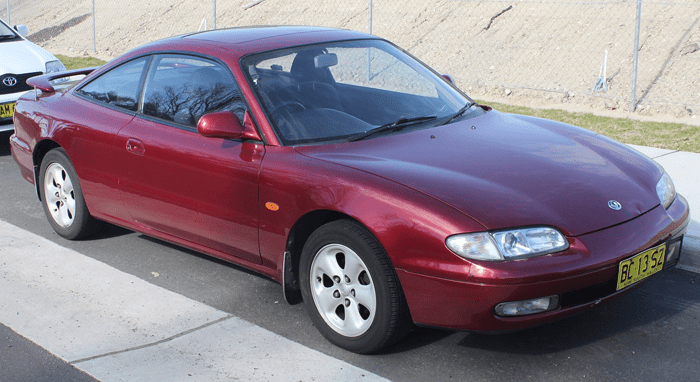
A Stylish Sport Coupe Combining Performance and Everyday Comfort
The Mazda MX-6 was a front-wheel-drive sports coupe produced from 1987 to 1997, developed alongside the Mazda 626 sedan. Designed as a sporty alternative within Mazda’s passenger-car lineup, the MX-6 featured a sleek two-door body, a low-slung profile, and a driver-focused interior. It was sold in multiple markets and became particularly known for its combination of attractive styling, comfortable cruising, and accessible performance.
Responsive Engines and Advanced Chassis Technology
Depending on the generation and market, the Mazda MX-6 was offered with four-cylinder and V6 gasoline engines paired with manual or automatic transmissions. Higher-performance versions featured larger V6 engines and advanced suspension systems, while some markets also received four-wheel steering technology that improved handling and stability. The second-generation MX-6 shared its platform with the Mazda 626 and Ford Probe and was produced until 1997, after which Mazda discontinued the model as the company shifted its focus toward newer sports and performance vehicles.
- Mazda Ford Courier
- Mazda RX-2
- Mazda Navajo
- Mazda R360
- Mazda R100
- Mazda Familia Astina
- Mazda Roadpacer AP
- Mazda MXR-01
- Mazda Cronos
- Mazdaspeed3
- Mazda Sentia
- Mazda 737C
- Mazda 717C
- Mazda 121
- Mazda 323F
- Mazda Ford Laser
- Mazda Efini MS-8
- Mazda Autozam Revue
- Mazda Ford Festiva
- Mazda Rotary Pickup
- Mazda Sao Penza
- Mazda AZ-Wagon
- Mazda Biante
- Mazda Titan
- Mazda Mazdago
- Mazda 787B
- Mazda Premacy
- Mazda 757
- Mazda 727C
- Mazda Demio
- Mazda RX-8 Hydrogen RE
- Mazda Premacy Hydrogen RE Hybrid
- Mazda AZ-Offroad
- Mazda Persona
- Mazda 929
- Mazda3
- Mazda MPV
- Mazda Nasim
- Mazda RX-792P
- Mazda MX-5 10th Anniversary Model
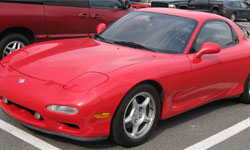
- Mazda RX-7
- Mazda MX-3
- Mazda B-Series
- Mazda RX-4
- Mazda6
- Mazda Mercury Tracer

(Photos Courtesy of https://en.wikipedia.org/)



Mazda Website
Mazda on Pinterest
Mazda on Youtube
Mazda on Facebook
Mazda on Twitter
Mazda on Pinterest
Swipe to see other trivia